

The VAT rate is updated according to the provisions of Article 9. Value Added Tax Law 2024 and Decree 174/2025/ND-CP This has brought about many important adjustments for the business community in Vietnam. Proper implementation of tax rate frameworks not only helps businesses fulfill their legal obligations but also minimizes the risk of administrative penalties and tax arrears collection during inspections and audits by authorities.
In the context of the strict implementation of a digital tax management system by the tax authorities, any confusion between tax rates can lead to serious financial risks. This article from MAN – Master Accountant Network will comprehensively analyze each tax rate, its application regulations, and practical lessons in tax management.
What is the VAT tax rate and what are the latest legal regulations?
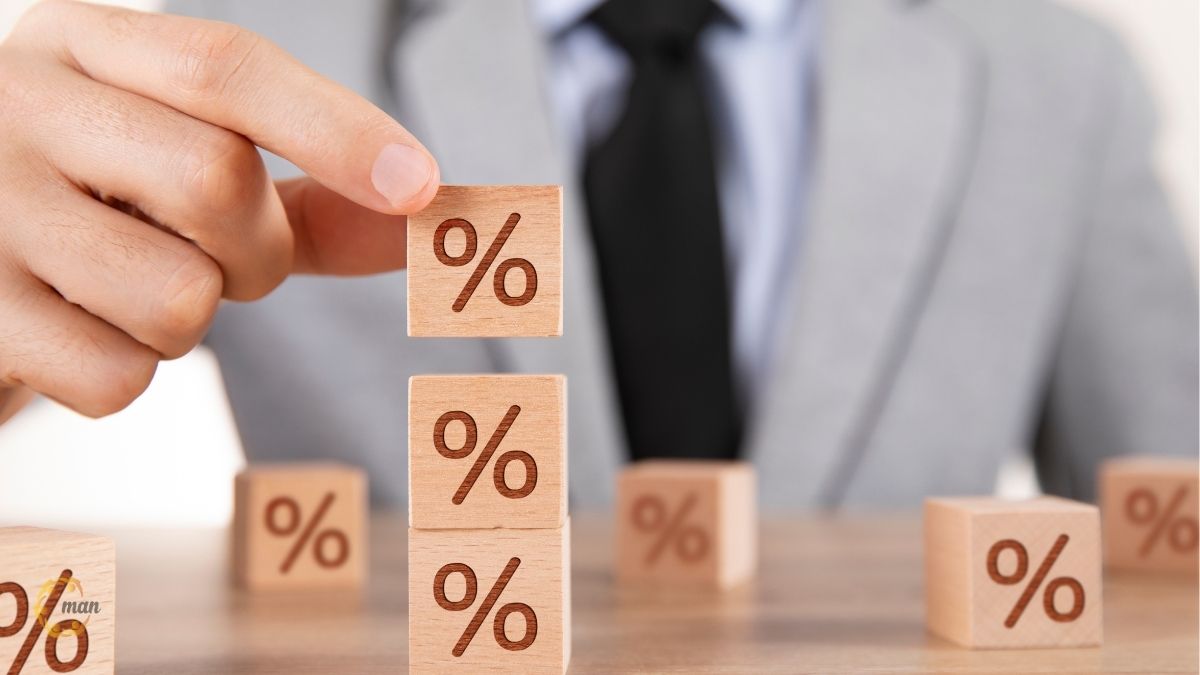
Businesses need to accurately determine the legal nature of the tax rate before proceeding with invoice declaration. Tax rate VAT It represents the tax liability arising on each unit of value added of goods and services circulating through the stages from production and distribution to final consumption.
The core legal basis currently in effect includes Article 9 of the Value Added Tax Law 2024 combined with Decree 174/2025/ND-CP and Resolution 204/2025/QH15. This system of regulations stipulates the synchronization of 04 official tax rates, including 0%, 5%, 8%, and 10%.
The current tax policy continues to maintain the mechanism of reducing VAT from 10% to 8% for certain groups of goods and services. However, its application requires careful consultation of the attached appendix to avoid discrepancies in declarations between different industry groups.
| Tax rate | Main categories of goods and services to which the regulations apply. | Conditions & Exceptions to Note |
| 0% | Exported goods and services, international transport, sales to duty-free zones and duty-free shops, and construction projects abroad. | Complete documentation is required, including bank payment receipts and customs declarations. This does not apply to technology transfer, financial services, telecommunications, or the sale of petroleum products into the free trade zone. |
| 5% | Essential goods and services: clean water, fertilizers, pesticides, processed agricultural products, medical equipment, medicines, and education. | This does not apply to bottled water, canned drinks, and soft drinks. |
| 8% | Goods and services under tariff group 10% will have their tariff reduced by 2% according to Resolution 204/2025/QH15. | Excluding the following sectors: finance, banking, securities, insurance, real estate, telecommunications, metal products, mining (excluding coal), and goods subject to excise tax. |
| 10% | Other ordinary goods and services not eligible for tax exemption, 0%, 5% or 8%. | This is mandatory for e-commerce services and digital platforms provided by foreign providers without a permanent establishment in Vietnam. |
What is the role of VAT rates in corporate financial management and auditing?
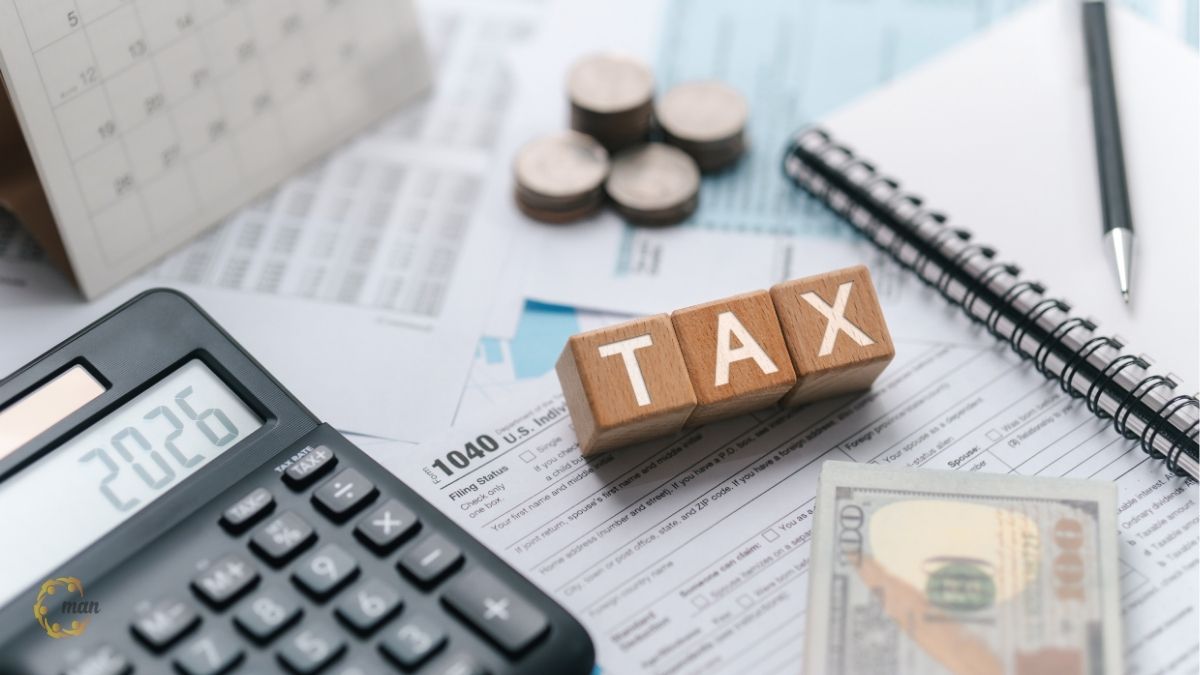
Value-added tax (VAT) is an indirect tax; the final consumer bears the tax burden, but businesses act as the tax collectors and remit the tax to the state budget. The accuracy of applying the tax rate directly impacts the cash flow and operating costs of an organization.
When a business incorrectly determines the VAT rate to be lower than the prescribed rate, the tax authorities will collect the outstanding tax amount, along with a late payment penalty of 0.051 TP3T/day and an administrative penalty of 201 TP3T on the underdeclared tax amount. Conversely, if a business issues invoices with a higher tax rate than prescribed without making adjustments, customers will face difficulties in deducting input tax.
From the perspective of MAN – Master Accountant Network, effective tax classification management helps businesses standardize accounting processes, increase transparency in financial reporting, and enhance credibility when working with tax authorities and independent auditors.
What are the details of the four VAT tax rates according to the latest regulations?
Businesses need to understand the detailed list of goods and services corresponding to each tax rate in order to apply them accurately to their daily business operations.
Which entities are subject to the VAT rate 0%, and what are the exceptions?
The 0% tax rate is designed to encourage export activities and promote the competitiveness of Vietnamese goods in the international market. This tax rate allows businesses to deduct and refund the entire amount of input VAT paid in previous stages.
Based on Clause 1, Article 9 of the Value Added Tax Law 2024, the groups of subjects to which the 0% tax rate applies include:
- Exported goods include: goods from Vietnam sold to organizations and individuals abroad and consumed outside Vietnam; goods from within Vietnam sold to organizations in free trade zones and consumed within those zones, directly serving export production activities; goods sold in quarantine areas to individuals (foreigners or Vietnamese) who have completed exit procedures; and goods sold at duty-free shops.
- Export services include: services provided directly to organizations and individuals abroad and consumed outside Vietnam; and services provided directly to organizations within free trade zones and consumed within those zones, directly serving export production activities.
- Other exported goods and services include: international transport; rental services for transport vehicles used outside the territory of Vietnam; aviation and maritime services provided directly or through agents for international transport; construction and installation activities abroad or in free trade zones; digital information content products provided to foreign parties with documentation proving consumption outside Vietnam as prescribed by the Government; spare parts and replacement materials for repairing and maintaining vehicles, machinery, and equipment for foreign parties and for consumption outside Vietnam; goods processed for re-export as prescribed by law; goods and services that are exempt from value-added tax when exported.
Cases Are not The following are subject to tax rate 0%:
- Technology transfer, transfer of intellectual property rights abroad.
- Offshore reinsurance services.
- Credit granting services.
- Capital transfer.
- Derivative products.
- Postal and telecommunications services.
- Export products as stipulated in Clause 23, Article 5 of the Value Added Tax Law 2024.
- Tobacco, wine, beer are imported and then exported.
- Gasoline and diesel purchased domestically are sold to businesses within the free trade zone.
- Cars sold to organizations and individuals in duty-free zones.
Which essential goods and services are subject to the VAT rate 5%?
The 5% tax rate applies to essential goods and services that serve people's lives, agricultural development, healthcare, education, and science and technology.
Based on Clause 2, Article 9 of the Value Added Tax Law 2024, the list of items to which the 5% tax rate applies specifically includes:
- Clean water for production and daily life does not include bottled or packaged drinking water and other soft drinks.
- Fertilizers, ores for fertilizer production, pesticides, and animal growth stimulants as regulated by law.
- Services include digging and dredging canals, ditches, ponds, and lakes to support agricultural production; cultivating, caring for, and controlling pests and diseases in crops; and processing and preserving agricultural products.
- Products from crops, planted forests (excluding timber and bamboo), livestock, aquaculture, and fishing that have not been processed into other products or have only undergone basic processing, except for products specified in Clause 1, Article 5 of the Value Added Tax Law 2024.
- Rubber latex in the form of crepe latex, sheet latex, vermicelli latex, and granulated latex; nets, ropes, and threads for weaving fishing nets.
- Products made from jute, sedge, bamboo, reeds, leaves, straw, coconut shells, coconut husks, water hyacinth, and other handicrafts produced using recycled agricultural materials; coarsely and finely combed cotton fibers; and newsprint paper.
- Fishing vessels operating in the sea; specialized machinery and equipment serving agricultural production as regulated by the Government.
- Medical devices as regulated by the law on medical device management; preventive and curative medicines; pharmaceutical substances and medicinal materials used as raw materials for the production of curative and preventive medicines.
- Teaching and learning equipment includes: various models, drawings, blackboards, chalk, rulers, and compasses.
- Traditional and folk performing arts activities.
- Children's toys; books of all kinds, except for books specified in Clause 15, Article 5 of the Value Added Tax Law 2024.
- Scientific and technological services as regulated by the Law on Science and Technology.
- Selling, renting, or lease-purchasing social housing in accordance with the provisions of the Housing Law.
How is the VAT rate regulation 8% under Decree 174/2025/ND-CP implemented?
The policy of reducing VAT to 8% applies to goods and services currently subject to the 10% tax rate according to Resolution 204/2025/QH15 and Decree 174/2025/ND-CP dated June 30, 2025, aiming to support consumer demand stimulation and reduce cost pressure for businesses.
Decree 174/2025/ND-CP excludes certain sectors from tax reductions, continuing to apply rate 10%:
- Telecommunications, financial activities, banking, securities, insurance, real estate business, metal products, mining products (excluding coal). Details are in Appendix I issued with Decree 174/2025/ND-CP.
- Goods and services subject to excise tax (excluding gasoline). Details are in Appendix II issued with Decree 174/2025/ND-CP.
The 8% tax reduction policy is applied uniformly across import, production, processing, and commercial trading stages. In cases where goods and services listed in Appendices I and II are exempt from value-added tax or subject to value-added tax under the 5% provisions of the Value-Added Tax Law, the provisions of the Value-Added Tax Law shall apply, and no tax reduction will be granted.
What VAT rate (10%) applies to ordinary goods and services and foreign suppliers?
Based on Clause 3, Article 9 of the Value Added Tax Law 2024, the 10% tax rate is the standard tax rate applicable to all goods and services not belonging to tax rate groups 0%, 5%, or not subject to tax reduction under group 8%.
Specifically, the law stipulates that the 10% tax rate is mandatory for services provided by foreign providers without a permanent establishment in Vietnam to organizations and individuals in Vietnam through e-commerce channels and digital platforms.
This mechanism ensures equal tax obligations between domestic service providers and cross-border technology corporations.
Summary of current legal documents on VAT rates
For ease of reference and legal comparison, the following is a summary table of currently effective legal documents:
| Legal documents | Date of issuance | Summary of content | Applicable notes |
| VAT Law 2024 | 26/11/2024 | The general tax rate frameworks 0%, 5%, 10% and the subjects to which they apply are stipulated in Article 9. | This replaces the 2008 Value Added Tax Law and its amendments. |
| Resolution 204/2025/QH15 | 17/06/2025 | Approve the VAT reduction policy 2% for goods group 10%. | The legal basis for tax reduction policies. |
| Decree 174/2025/ND-CP | 30/06/2025 | Guidelines for implementing the policy of reducing VAT to 8%, as stipulated in Appendices I and II. | Apply the details to each industry code and HS code. |
What are the important principles that accountants need to keep in mind when applying VAT rates?
When declaring and calculating VAT rates, experts at MAN, with 30 years of experience, advise businesses to strictly adhere to the following fundamental principles:
Principles of classification based on tax rates.
Businesses that sell a variety of goods and services with different value-added tax (VAT) rates (including those not subject to VAT) must declare VAT according to each VAT rate prescribed for each type of goods and services.
In cases where a business establishment does not determine the tax rate for each item, it must calculate and pay tax at the highest tax rate applicable to the goods and services it produces or provides.
Principles applicable to multi-purpose agricultural products
Products from crops, planted forests, livestock, aquaculture, and fisheries that have not been processed into other products or have only undergone basic processing and are used as animal feed or medicinal materials are subject to value-added tax at the rate prescribed for crops, planted forests, livestock, and aquatic products (level 5%).
Businesses are not allowed to arbitrarily switch to tax group 10% if the goods meet the requirements for normal preliminary processing as stipulated.
Principles of tax rates for recovered scrap and waste materials.
Waste products, by-products, and scrap materials that are recovered for recycling or reuse are subject to the tax rate applicable to the specific waste products, by-products, and scrap materials being sold.
Businesses need to clearly distinguish between scrap sold domestically and scrap exported in order to apply the correct corresponding tax rate, which is 10% (or 8%) or 0%.
Real-world case study: Addressing errors in VAT tax rates at Vietnamese manufacturing enterprises.
To better understand the impact of applying the wrong VAT rate, consider the real-world case of X Food Processing Joint Stock Company (Ho Chi Minh City), as advised by the MAN team.
Context and Situation
Company X operates in the seafood processing sector for both export and domestic consumption. During the fiscal year, Company X sold a large quantity of fish by-products (fish heads, fish bones) to animal feed factories.
The accounting department of Company X issued an invoice with a tax rate of 10% (and applied a reduction of 8% according to the tax reduction policy), arguing that it was a processed industrial product. However, the purchasing partners refused to pay this 8% tax because the buyers argued that unprocessed seafood by-products should be subject to a VAT rate of 5%.
The disagreement resulted in a long-standing debt of 3 billion VND and the risk of Company X being subject to tax collection and penalties from the tax authorities for issuing invoices incorrectly.
Analysis and Solutions from MAN
The team of experts at MAN – Master Accountant Network directly reviewed the entire technological process, customs declaration code, and the commercial nature of the shipment.
The legal analysis results show that: Company X's fish by-products have only undergone preliminary freezing and processing, and have not been transformed into other compounds. Furthermore, the purpose of selling them is as animal feed ingredients. According to the Value Added Tax Law, this item falls under VAT rate 5%, and does not belong to group 10% or 8%.
The solutions MAN has implemented for Company X:
- Prepare a record of invoice correction for erroneous invoices with the buyers, and recall the invoices issued with incorrect tax rates (8%/10%).
- Additional documentation is required to demonstrate the standard processing procedures and a document confirming the intended use as animal feed ingredients.
- Reissue the adjusted invoice with the standard tax rate 5%.
- Submit the amended and supplementary VAT tax returns for the relevant periods to the directly managing tax authority.
The results obtained
Thanks to timely intervention from MAN, Company X recovered the entire 3 billion VND in outstanding goods from its partner. The difference in VAT tax (from 8% down to 5%) that had been overdeclared previously was approved by the tax authorities to be offset against tax obligations in subsequent periods, equivalent to 1.5 billion VND.
At the same time, Company X avoided administrative penalties for invoice violations and late payment fees estimated at over 300 million VND.
MAN experts' assessment of common risks and optimal solutions for VAT tax rates.
With over 30 years of experience providing tax consulting and auditing services to thousands of businesses in Vietnam, experts at MAN have identified the three biggest risks that businesses often face related to VAT rates:
Risk of not meeting the eligibility requirements for tax rate 0%.
Many businesses mistakenly believe that simply exporting goods out of Vietnam automatically entitles them to the VAT rate of 0%. In reality, the tax authorities apply a very strict inspection mechanism to tax refund applications and 0% invoices.
Businesses are often rejected for the 0% tax rate and subjected to retroactive tax collection under 10% due to the lack of one of the following elements: bank payment documents not in the correct name of the importer, customs declarations not cleared on time, or export contracts lacking mandatory clauses under commercial law.
Incorrectly quoting the HS code leads to the wrong application of the 8% tax rate.
The policy of reducing VAT to 8% is based on the list of economic sector codes and HS codes for imported goods. Many businesses incorrectly look up HS codes themselves, leading to the issuance of 8% invoices for items listed in Appendix I or Appendix II of Decree 174/2025/ND-CP (groups not eligible for tax reduction).
During a tax audit, the entire amount of the outstanding tax under Article 2% will be collected, along with late payment penalties calculated from the date the tax liability arose.
No separate accounting system for revenue was established.
When a business simultaneously sells products subject to VAT rates 5%, 8%, 10%, and those not subject to VAT, but does not install accounting software to separate revenue for each segment, the tax authorities have the right to apply the VAT rate 10% to the entire total revenue of the business. This unnecessarily increases tax expenses.
Solutions from MAN – Master Accountant Network:
Businesses should create an "Internal VAT Rate Lookup Handbook" coded according to each product SKU. Simultaneously, they should conduct quarterly invoice reviews to detect errors before finalizing the annual tax return.
Conclude
Accurately determining the VAT rate is a fundamental step in tax compliance and corporate financial management. Staying up-to-date on new regulations such as the 2024 VAT Law and Decree 174/2025/ND-CP helps businesses maximize tax incentives, eliminate the risk of retroactive tax collection, and optimize operating cash flow.
Tax services at MAN – Master Accountant Network
- Tax accounting services
- Tax consulting services
- Tax settlement services
- Tax reporting services
- VAT refund service
Service contact information at MAN – Master Accountant Network
- Address: No. 19A, Street 43, Tan Thuan Ward, Ho Chi Minh City
- Mobile/Zalo: 0903 963 163 – 0903 428 622
- E-mail: man@man.net.vn
- Google Business Profile: View MAN – Master Accountant Network's Google Business Profile
- LinkedIn Founder: View expert Le Hoang Tuyen's LinkedIn profile.
Responsible for production and professional content review by: Mr. Le Hoang Tuyen – Founder & CEO of MAN – Master Accountant Network, CPA Vietnam with over 30 years of experience in accounting, auditing, taxation, and corporate financial consulting.
Frequently Asked Questions about VAT Rates (FAQ)
At what point in time is the VAT rate applied?
The VAT rate is applied at the time the invoice is issued, which is the time of transfer of ownership or the right to use the goods, or the time of completion of the service provision, regardless of whether payment has been received or not.
What are the procedures for businesses that incorrectly issue VAT tax returns with a higher rate than the actual amount?
Businesses and buyers must create a record clearly stating the error. The seller then issues an adjusted invoice or replacement invoice to the buyer, and simultaneously amends the VAT tax return for the period in which the error occurred.
What are the consequences for businesses that fail to separate their revenue according to different tax rates?
If a business does not determine and separate revenue according to each tax rate, it must calculate and pay tax at the highest tax rate applicable to the goods and services it provides.
What tax rate applies to processed agricultural products sold as animal feed?
Unprocessed or only minimally processed agricultural products, forest products, livestock, and aquatic products used as animal feed or medicinal materials are still subject to VAT rate 5%.
What is the tax rate for software services provided to foreign parties?
Digital information content products and software services provided to foreign parties are subject to VAT rate 0% if there is documentation proving consumption outside Vietnam as stipulated by the Government.