


Import duties are one of the most important technical barriers and economic regulatory tools for any country in the process of international trade integration. For Vietnamese businesses, mastering import duty regulations not only helps optimize product costs but is also crucial for ensuring legal compliance and avoiding heavy administrative penalties from customs authorities.
With new-generation Free Trade Agreements (FTAs) like CPTPP, EVFTA, and RCEP entering a phase of deep tariff reductions, understanding the nature of import duties and how to apply preferential import tariff schedules has become more crucial than ever. This article will provide an overview, from the definition and detailed tax calculation formulas to in-depth insights from a practical auditing perspective.
Summary of key points regarding import taxes
- Import tax It is an indirect tax levied on goods imported from foreign countries through border crossings, customs checkpoints, or free trade zones into the domestic market.
- Purpose: Increase state budget revenue, protect domestic production, and regulate the trade balance.
- Applicable objects: Businesses and individuals must carry out import activities in accordance with the law.
- Tax calculation time: This is the time to register the customs declaration form as required by regulations.
Compilation of the latest legal documents on import taxes.

To effectively manage risk, businesses need to store and regularly update the following documents:
- Law on Export and Import Taxes No. 107/2016/QH13: The original document specifies the subjects, basis, and timing of tax calculation.
- Decree 134/2016/ND-CP: Detailed guidelines for the implementation of the Law on Import and Export Taxes (amended by Decree 18/2021/ND-CP).
- Circular 38/2015/TT-BTC & Circular 39/2018/TT-BTC: Detailed regulations on customs procedures, inspection, supervision, and tax management.
- Decree on Special Preferential Import Tariff Schedule: They are usually issued in stages (for example, the 2022-2027 period for FTAs).
What is import tax? Definition and legal nature
According to the provisions of the current Law on Export and Import Taxes (Law No. 107/2016/QH13Import tax is a tax levied on goods permitted to be imported through Vietnamese border gates and checkpoints, including goods from the domestic market into free trade zones and vice versa.
Essentially, this is an indirect tax. The taxpayer (the importing business) is not the ultimate tax bearer; instead, they pass this cost on to domestic consumers. Therefore, high or low import taxes directly affect the competitiveness of foreign goods compared to domestic goods.
Characteristics of import taxes in Vietnam:
- Compulsion: It is a mandatory financial obligation for all entities involved in import activities.
- Non-refundable Tax revenue paid into the State budget serves the common good of society.
- Linked to territory: Taxes are levied as soon as goods cross a country's economic border.
Import tariff schedule and current tax rates
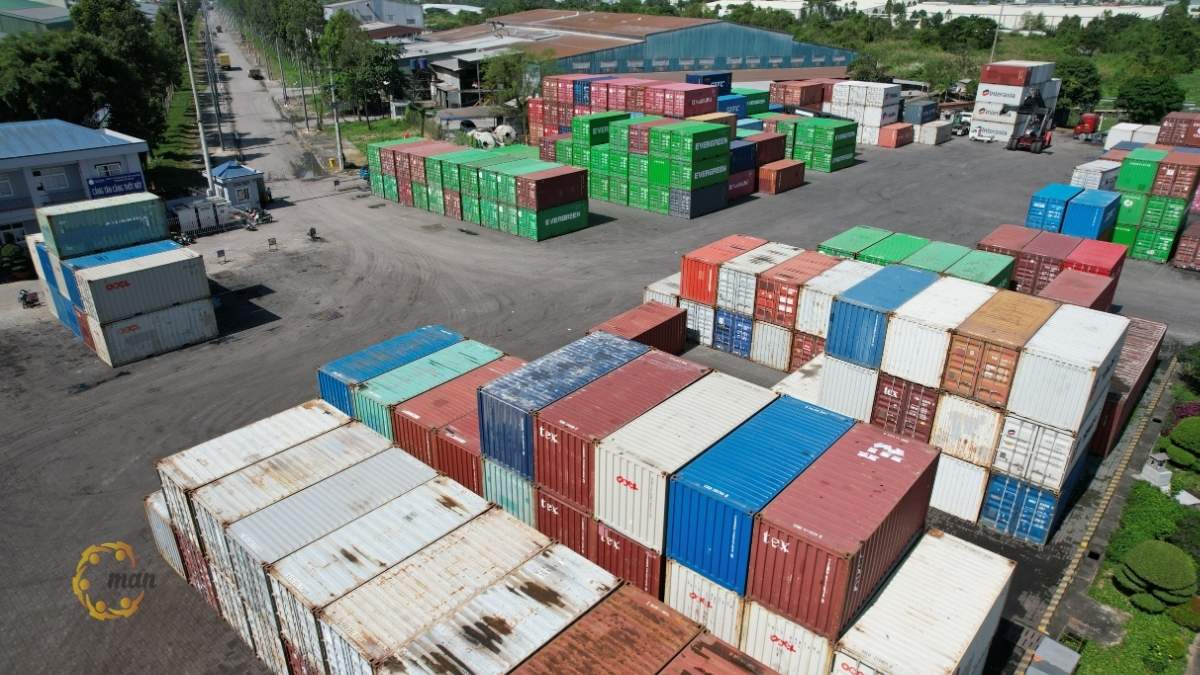
Each year, the government issues an import tariff schedule for uniform application. Identifying the correct tariff rate is key to accurately calculating financial obligations.
Most Favored Nation (MFN) tax rate
This applies to imported goods originating from countries, groups of countries, or territories that grant Most Favored Nation (MFN) treatment in trade relations with Vietnam.
Free Trade Agreement (FTA) special preferential tax rates
This tax rate applies to goods originating from countries that have signed free trade agreements with Vietnam (such as ASEAN, South Korea, Japan, the EU, etc.). To apply this tax rate, businesses are required to have a valid Certificate of Origin (C/O).
Normal tax rate
This applies to goods not falling under the above categories. The normal tax rate is equal to 150%, which is the preferential tax rate for each corresponding item.
Detailed instructions on how to calculate import tax for businesses.
Currently, Vietnamese law stipulates three main methods for calculating import tax. Depending on the list of goods on the customs declaration, businesses will apply the appropriate formula.
How to calculate import tax using the percentage method (%)
This is the most common method, accounting for over 901 TP3T of current customs declarations.
Formula for calculating import tax:
|
Import tax payable = Actual quantity of each item imported x Taxable value per unit x Import tax rate (%) |
In there:
- Quantity: Based on the results of inspection or assessment by the customs authority.
- Taxable value: Customs valuation is typically determined based on the principles of the Agreement on Customs Valuation (GATT).
- Tax rate: Look up the HS Code in the current import tariff schedule.
How to calculate import tax using the absolute method.
This applies to certain specific items such as used cars and used machinery parts. Recipe:
|
Import tax payable = Actual quantity of imported goods x Absolute tax rate per unit of goods |
How to calculate import tax using the mixed method.
This method combines both of the above approaches and is often applied to goods that the government wants to tightly control in terms of both price and quantity. Recipe:
|
Import tax payable = Tax calculated at a rate of % + Tax calculated at an absolute rate |
Methods for calculating import tax value: FOB and CIF
One of the common mistakes in accounting is incorrectly determining the value for tax calculation. It is necessary to clearly distinguish between calculating import tax based on CIF price and calculating import tax based on FOB price.
How to calculate import tax based on CIF price (Cost, Insurance, Freight)
CIF price includes: Goods price + Insurance fee + International freight cost. According to Vietnamese Customs regulations, the taxable value is the actual price paid up to the first port of entry. Therefore, if a business purchases goods at CIF price, the taxable value is the price stated in the contract (if accepted).
Formula for calculating taxable value (CIF):
|
Taxable value = CIF price x Foreign exchange rate |
How to calculate import tax based on FOB (Free on Board) price.
FOB price only includes the cost of goods loaded onto the ship at the port of export. To calculate taxes, businesses must add transportation and insurance costs to arrive at the CIF price.
Conversion formula:
|
Taxable value = (FOB price + International freight + International insurance fee) x Foreign exchange rate |
Procedure for determining import tax calculation on customs declaration form.
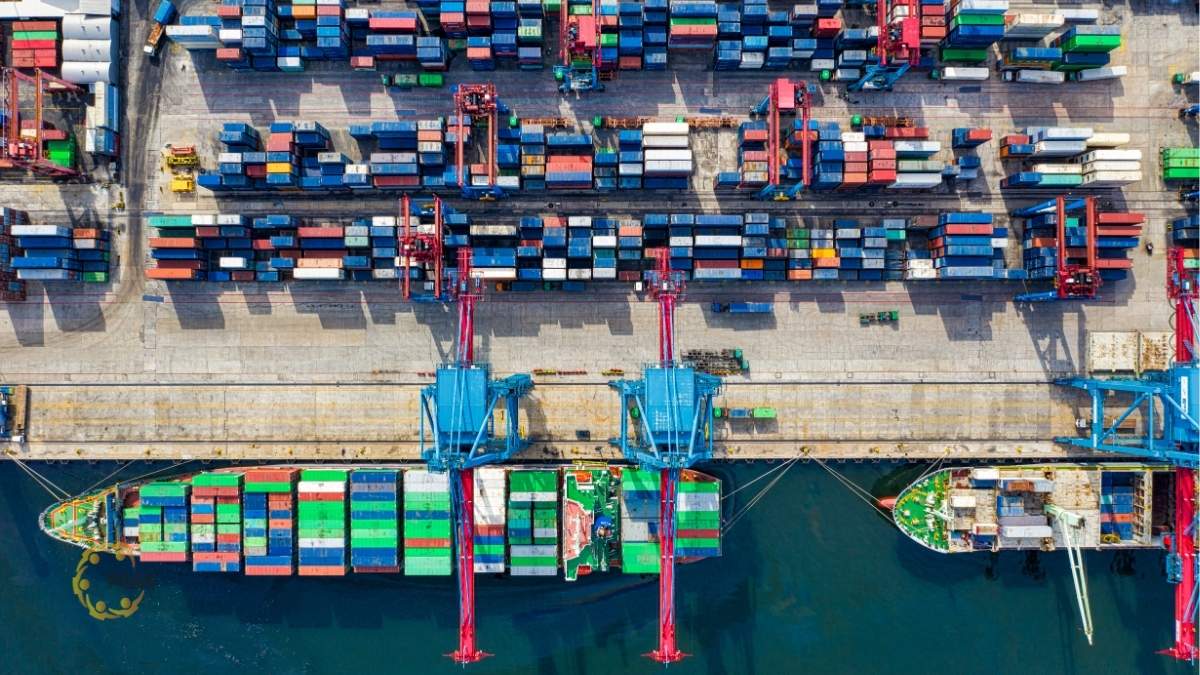
When making declarations on the VNACCS/VCIS system, accountants need to follow these steps to ensure that the import tax calculation formula is applied correctly:
- Determine the HS Code: This is the most crucial step. An incorrect HS code will lead to the wrong tax rate and the risk of penalties for tax fraud.
- Determining customs value: This includes the purchase price and any adjustments added (such as royalties, packaging fees) or adjustments subtracted.
- Determine the exchange rate for tax calculation: Use the buying exchange rate published by the State Bank of Vietnam on the date of filing the declaration.
- Check eligibility for the promotion: If a Certificate of Origin (C/O) is available, the corresponding preferential tariff code must be entered (for example, B01 for preferential import duties, B05 for EVFTA).
Practical Case Study: Calculating Import Tax for Machinery and Equipment
Situation: Company A imported 10 industrial printers from Germany.
- FOB price at Hamburg port: $20,000 per unit.
- International shipping cost (F): USD 2,000/shipment.
- Insurance premium (I): 500 USD/shipment.
- Most Favored Nation (MFN) import tariff rate: 10%.
- Goods with C/O Form EUR.1 (eligible for EVFTA tax rate): 0%.
- VAT on imported goods: 10%.
- Exchange rate: 1 USD = 25,000 VND.
Taxable value (VND): [(20,000 x 10) + 2,000 + 500] x 25,000 = 5,062,500,000 VND.
Case 1 (No Certificate of Origin):
- Import tax = 5,062,500,000 x 10% = 506,250,000 VND.
- VAT = (5,062,500,000 + 506,250,000) x 10% = 556,875,000 VND.
Case 2 (With a valid C/O Form EUR.1):
- Import tax = 5,062,500,000 x 0% = 0 VND.
- VAT = (5,062,500,000 + 0) x 10% = 506,250,000 VND.
Conclude: Thanks to the Certificate of Origin (C/O), the business saved over 500 million VND in import taxes and reduced the burden of input VAT.
Expert opinion: Potential risks and handling experiences.
With over 30 years in the auditing industry, I've observed that SMEs often make these three fatal mistakes:
Risk of rejecting the transaction value.
Customs authorities often suspect shipments with declared values that are significantly lower than the values in their price database.
Experience: Businesses need to prepare a "Price Consultation File" including bank payment documents, manufacturer's price list, and similar contracts from other partners to defend the declared value.
Risks regarding the validity of the Certificate of Origin (C/O).
Many businesses mistakenly believe that having a Certificate of Origin (C/O) guarantees tax reductions. However, even a small error in the product name, address, or origin criteria that doesn't match actual production can lead to the C/O being rejected.
Experience: Perform a double check between the customs declaration and the Certificate of Origin (C/O) before transmitting the data. Note the direct consignment rule to avoid invalidating the C/O when goods transit through a third country.
HS code discrepancies during post-inspection
Post-clearance inspections can take place within 5 years from the date of customs clearance. Applying the wrong HS code not only results in tax arrears but also penalties ranging from 10-20% of the outstanding tax amount and late payment interest of 0.03%/day.
Experience: For new and complex items, businesses should carry out the "Pre-determination of HS Code" procedure at the General Department of Customs to obtain legal documentation to protect themselves.
Conclude
Import tax is a complex cost calculation requiring a seamless combination of accounting expertise and a deep understanding of customs law. A thorough understanding of what import tax is and how to calculate it not only helps businesses proactively plan their finances but also builds their reputation as a "Priority Enterprise" in the eyes of regulatory authorities.
If your business is struggling with determining HS codes, optimizing customs valuation, or concerned about post-audits from tax authorities, let MAN – Master Accountant Network be your partner. With a team of leading experts in the field of auditing, Tax accounting and Tax Consulting, We are committed to providing the safest, most efficient, and transparent solutions for all your cross-border transactions.
Service contact information at MAN – Master Accountant Network
- Address: No. 19A, Street 43, Tan Thuan Ward, Ho Chi Minh City
- Mobile/Zalo: 0903 963 163 – 0903 428 622
- Email: man@man.net.vn
Content production by: Mr. Le Hoang Tuyen – Founder & CEO MAN – Master Accountant Network, Vietnamese CPA Auditor with over 30 years of experience in Accounting, Auditing and Financial Consulting.
Frequently Asked Questions about Import Taxes
Yes. Non-commercial goods are still subject to tax according to the current tax schedule, except in cases where the value of the shipment is below the tax-free limit as stipulated (usually less than 1 million VND or the tax payable is less than 100,000 VND).
Typically, businesses must pay taxes before customs clearance or release of goods. In some cases, businesses with priority status or bank guarantees may be allowed to pay later, but they will have to pay a guarantee fee.
Yes. Based on Article 19 of the Import and Export Tax Law, goods that have paid import tax but must be re-exported back to the original owner or re-exported to a third country will be refunded the import tax corresponding to the actual quantity of goods re-exported.
This is an additional import tax. It is applied in special cases to protect domestic industries from unfair competition from foreign goods.
Businesses should use customs declaration software (such as ECUS/VNACCS) or directly access the General Department of Customs' electronic portal to look up the most up-to-date HS codes and tax rates. Are non-commercial imported goods (gifts) subject to import tax?
What is the deadline for paying import taxes?
Is it possible to get a refund of import tax if goods have already been imported but must be re-exported?
Are anti-dumping duties considered import duties?
How can I quickly look up import tariff schedules?