

Deductible expenses from corporate income tax are an important basis for businesses to legally reduce their tax burden. According to Circular 96/2015/TT-BTC, only expenses directly related to business activities, with valid documents and paid in accordance with regulations can be counted as reasonable expenses. In fact, many businesses have their expenses excluded during inspections due to lack of invoices, incorrect payment methods or expenses exceeding the prescribed amount. So what are acceptable expenses, in which cases are they still valid without invoices, and how can businesses effectively control tax risks?
Overview of deductible expenses
Tax management is not only a legal obligation but also an important financial strategy of enterprises. In particular, deductible expenses are a tool to help optimize corporate income tax, reduce legal tax burden and improve cash flow. Correct application of regulations on deductible expenses also improves business efficiency and ensures financial transparency. On the contrary, if recorded incorrectly or lacking documents, enterprises are susceptible to expense exclusion, tax collection and penalties during inspection and examination.
What are deductible expenses?
Deductible expenses are reasonable, valid expenses with full documentation and directly serving production and business activities, which are allowed to be deducted when determining taxable income of enterprises. Understanding and correctly applying this principle helps enterprises to legally minimize tax obligations, while avoiding the risk of having expenses excluded, tax arrears or penalties during tax inspections and audits.
The role of deductible expenses
In financial and tax management, deductible expenses are not only a legal regulation, but also an important tool to help businesses effectively manage tax obligations and maintain transparency in business operations. Specifically, the role of deductible expenses is reflected in the following aspects:
Optimizing corporate income tax obligations
Correctly and fully including valid expenses in deductible expenses helps businesses reduce taxable income, thereby reducing the number of corporate income tax must be paid legally. This is the way to optimize finances without violating the law.
Accurately reflects business results
If expenses are not recorded correctly, the financial statements will not accurately reflect the actual profits of the enterprise. By applying the standards on deductible expenses, enterprises ensure the transparency and reliability of financial statements.
Limit legal risks and penalties
During tax audits, invalid expenses will be eliminated, leading to collection, late payment penalties, or administrative fines. Correctly recording deductible expenses helps businesses minimize this risk.
Increase credibility with investors, partners and banks
Enterprises with transparent financial reports and clear, valid costs will create trust for partners, banks and investors. This makes it easier to mobilize capital or expand business cooperation.
Support internal management and decision making
Controlling and correctly accounting for deductible expenses is also the basis for management to evaluate operational efficiency, thereby developing appropriate business, investment or cost-cutting strategies.
Three conditions for expenses to be deductible
According to Article 4 of Circular 96/2015/TT-BTC (amending and supplementing Circular 78/2014/TT-BTC), an expense is considered valid for deduction when determining taxable income for corporate income tax if it satisfies the following three conditions at the same time:
- Such expenses must serve the production and business activities of the enterprise;
- Have full invoices and legal documents according to the provisions of law on tax and accounting;
- In case the payment value is 20 million VND or more, it must be made through non-cash methods.
Legal basis related to expenses deductible from corporate income tax
Determining deductible expenses when calculating corporate income tax is regulated by many legal documents, from Laws, Decrees, Circulars to guiding documents of tax authorities. Understanding and correctly applying these bases helps businesses to account accurately, avoid the risk of having expenses excluded, collected or fined, while ensuring transparent financial reports and compliance with regulations. The table below summarizes important legal documents, main contents and points to note when applying:
| Legal documents | Main content | Noteworthy points |
| Corporate Income Tax Law No. 14/2008/QH12 (June 3, 2008) | General principles on taxable income and reasonable expenses | Is the highest legal foundation for corporate income tax |
| Law No. 32/2013/QH13 (amending and supplementing the Law on Corporate Income Tax) | Supplementing and adjusting regulations on taxable income and expenses | Expanding and narrowing some deductible expenses |
| Decree 218/2013/ND-CP (December 26, 2013) | Detailed instructions for implementing the Law on Corporate Income Tax | As a basis for the Ministry of Finance to issue guiding Circulars |
| Circular 78/2014/TT-BTC (June 18, 2014) | Instructions for implementing Decree 218/2013/ND-CP | Provide deductible and non-deductible expense groups |
| Circular 96/2015/TT-BTC (June 22, 2015) | Amendment and supplement to Circular 78/2014/TT-BTC | Article 4: stipulates 3 conditions for deductible expenses (related to production and business, legal documents, non-cash payment with amount > 20 million) |
| Circular 25/2018/TT-BTC (March 16, 2018) | Continue to amend and supplement Circulars 78 and 96 | Supplementing regulations on employee welfare costs, deductible but limited to a maximum of 1 month average salary/year |
| Guidance document of the Ministry of Finance, General Department of Taxation | Guidance on handling expenses in specific situations | Not as legally valuable as a law/circular but very important in practical application |
Why do businesses need to correctly determine deductible expenses?
Determining the correct deductible expenses is an important step to help businesses protect their financial interests and comply with legal regulations. First of all, incorrect accounting or inclusion of invalid expenses can lead to the risk of being disqualified when the tax authority conducts an inspection, thereby giving rise to the obligation to collect and impose administrative penalties.
In addition, when expenses are recorded correctly and sufficiently, businesses have the opportunity to legally reduce tax obligations, optimize cash flow and increase after-tax profits. This not only improves financial efficiency but also contributes to strengthening the reputation of the business in activities such as capital mobilization, credit rating or calling for investment.
Finally, financial reports that honestly reflect actual costs will help businesses control their budgets more effectively, easily analyze profit margins, evaluate operating performance and make the right management decisions.
Deductible expenses when calculating corporate income tax
In fact, if a business fails to fully record or comply with the regulations on documents, purposes of use and payment methods, these expenses will be excluded from deductible expenses during the tax inspection or audit process. This can lead to tax arrears, late payment penalties and many financial risks.
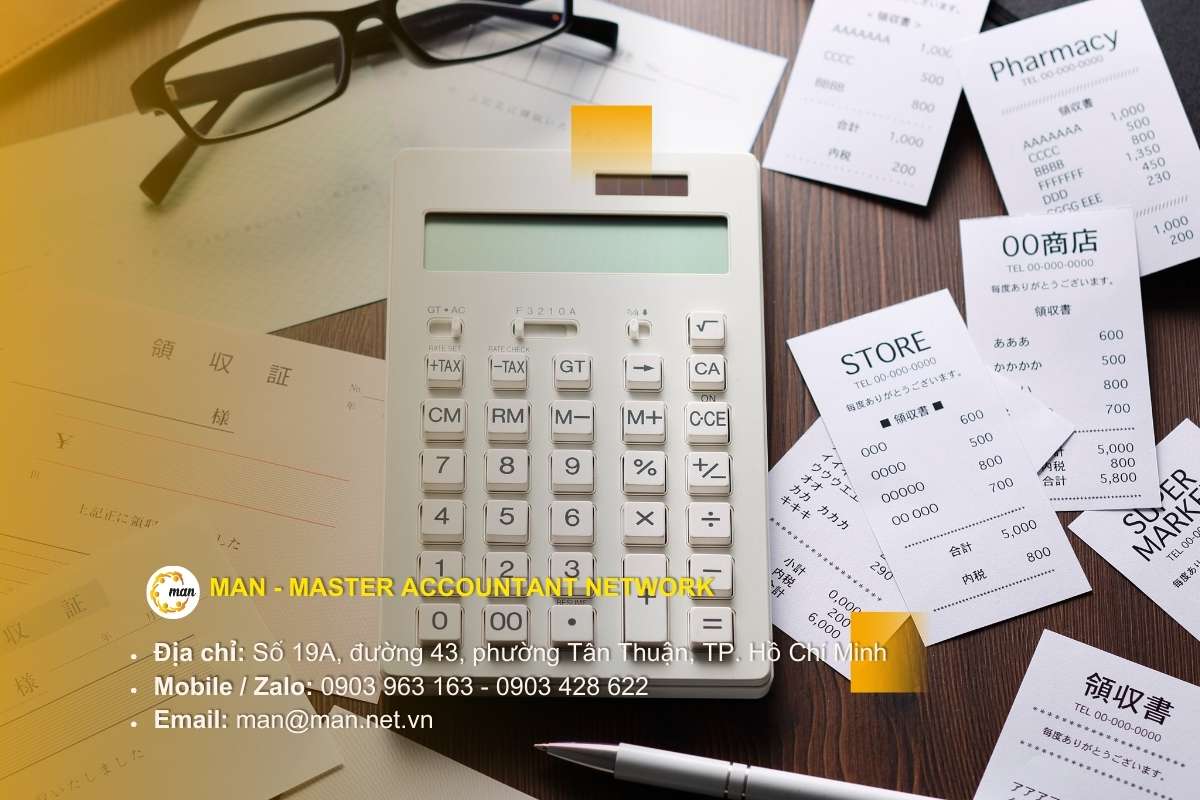
The table below summarizes the expense groups that are allowed to be included in valid expenses when determining taxable income of corporate income tax, along with the corresponding conditions of records, documents and legal basis.
| Cost group | Specific expenses | Conditions to note | Legal basis |
| Production and business costs | – Purchase of raw materials, goods, tools and equipment
– Renting assets, machinery, equipment, means of transport – Valid depreciation of fixed assets |
With legal documents; Fixed assets are depreciated according to the prescribed framework | Circular 96/2015, Article 4.1 |
| Personnel costs | – Salary, wages, allowances
– Social insurance, health insurance, unemployment insurance deductions – Welfare expenses for employees (maximum equal to 01 month average salary/year) |
Have labor contract, salary sheet, payment voucher; benefits must have company regulations/decisions | Circular 96/2015, Article 4.2; Circular 25/2018 |
| Business management costs | – Stationery, electricity, water, internet, telephone
– Office rental, warehouse, repair costs – Outsourcing services: security, cleaning, auditing, consulting |
Have valid invoice; expenses >20 million must be paid via bank | Circular 96/2015, Article 4.1 |
| Financial costs | – Loan interest for production and business purposes (not exceeding the prescribed ceiling)
– Compulsory property and fire insurance – Bank fees (money transfer, guarantee, international payment) |
Loan interest from organizations/individuals other than credit institutions does not exceed 150% base interest rate | Circular 96/2015, Article 4.2; Decree 218/2013 |
| Marketing and sales costs | – Advertising, marketing, promotions, brokerage commissions
– Transport, loading, unloading, storage and preservation of goods – Customer conference, hospitality expenses (according to control level) |
Have contract/budget, payment voucher; comply with the control level of guest spending | Circular 96/2015, Article 4.2 |
| Other expenses | – Provisions (inventory price reduction, bad debt)
– IT services, copyrighted software – Business expenses (tickets, accommodation, travel) |
Have decision/business trip appointment, ticket/plane/hotel invoice | Circular 96/2015, Article 4.2; Official Dispatch 4003/TCT-CS (2016) |
Periodically reviewing expenses by group as above not only helps businesses be proactive in the tax settlement process, but also creates a transparent foundation for more effective financial planning and cash flow management.
Non-deductible expenses when calculating corporate income tax
Not all expenses incurred during the course of business are considered reasonable expenses. According to Circular 96/2015/TT-BTC, expenses that do not meet the conditions of purpose, documents or exceed the prescribed limit will be excluded when determining taxable income.
Some commonly excluded cost groups include:
- Excess expenditures, such as: Reception expenses, gifts or advertising expenses exceeding the 15% revenue limit (with revenue over 20 billion VND);
- Unproven expenses for production and business purposes: Missing invoices, wrong recipients, no valid contracts;
- Costs related to violations of law: Administrative fines, expenses not permitted by law (such as illegal land expenses);
- Interest in related party transactions exceeds the threshold of 30% EBITDA, according to Decree 132/2020/ND-CP.
In addition to the above groups, many businesses also encounter technical errors that cause expenses to be disqualified, despite having complete documentation. Common mistakes include:
- Invoice with incorrect name and business tax code;
- Cash payment for expenses from 20 million VND or more;
- Wrong accounting period or recording expenses past the time of occurrence.
Good internal control, thorough review of accounting records and full compliance with the principles of deductible expenses will help businesses minimize tax risks during audits.
Reasonable expenses without invoices: Exceptions and how to prove them
According to regulations, deductible expenses when calculating corporate income tax must have full invoices and documents. However, there are still some exceptions allowed by law that do not require invoices, but businesses must ensure that they have alternative documents and prove the reasonableness and validity of the expense.
Some typical situations include:
- Purchase of goods and services from non-business individuals with total revenue of less than 100 million VND/year. These are subjects that are not required to issue invoices according to tax laws.
- Renting a house from an individual, in which the enterprise is the party paying personal income tax and business license fees on behalf of the individual. This expense is still included in the cost if there are full documents for payment on behalf of the individual according to the prescribed form.
- Purchases in remote areas where the seller does not have the conditions to issue invoices, but the transaction is proven to serve production and business activities.
For this expense to be accepted when settling taxes, businesses need to prepare alternative documents, including:
- Minutes of delivery and receipt of goods and services with payment vouchers or non-cash payment documents;
- Tax return submitted on behalf of an individual (in case of renting a house);
- Clearly explain the purpose of using the expense for production and business activities.
Illustrative example: Deductible and excluded expenses
The table below illustrates some specific situations to help businesses easily distinguish between eligible and potentially disqualified expenses:
| Situation | Deductible | No deduction |
| Reception of partners 5 million VND, with VAT invoice | X | |
| Tet bonus in kind, no warehouse receipt | X | |
| Hire auditing services, with contract and VAT invoice | X | |
| Related party transaction interest expense exceeds 30% EBITDA | x |
Expenses without invoices can still be accepted as deductible expenses if the business understands the exceptions and prepares full and valid replacement documents. Determining the correct boundary between deductible and excluded expenses not only helps businesses optimize taxes, but also proactively control risks when tax authorities conduct inspections and audits.
Instructions on how to handle when reasonable expenses are not deductible for corporate income tax
In reality, many expenses, although serving production and business activities, do not meet the requirements of documents, payments or exceed the control level, so they are not included in deductible expenses when determining taxable income. To ensure compliance with the law and limit risks, businesses need to handle them according to the following steps:
Clearly identify the reasons for non-deduction.
According to Article 4 of Circular 96/2015/TT-BTC, expenses that are often excluded from deductible expenses include: expenses not directly related to business; lack of legal documents; or expenses of VND 20 million or more but paid in cash. For controlled expenses (such as welfare expenses according to Circular 25/2018/TT-BTC), enterprises are only allowed to record within the legal limit, the excess will not be counted as deductible expenses.
Accounting according to accounting standards
According to Circular 200/2014/TT-BTC, even if the expenses do not qualify as deductible expenses, businesses must still account for them in accounting expenses to accurately reflect business results. However, when settling taxes, these expenses must be removed from deductible expenses.
Make adjustment table when settling corporate income tax
Pursuant to Form No. 03/TNDN in Circular 80/2021/TT-BTC, enterprises must adjust taxable income for non-deductible expenses. This is an important step to avoid being fined by the tax authority for incorrect declaration.
Keep records and explain when needed
When the tax authority conducts an inspection, the enterprise must present documents and evidence and clearly explain the reason why the expense is not deductible. This demonstrates transparency and limits legal risks.
Lessons learned and cost control
Enterprises should establish internal processes to control invoices, documents, contracts and payments, and promptly update new regulations to ensure that expenses are fully and validly recorded as deductible expenses.
Control and optimize deductible costs in the business
In order for expenses to be accepted when calculating corporate income tax, businesses need to build a systematic internal control process, ensuring the reasonableness, validity and completeness of documents for each expense. Below are the important steps in this process:
Step 1: Establish a clear internal spending approval process
Each expense incurred must be approved according to a transparent process, with a basis such as cost plans, contracts, and quotations. Clear approval authority between accountants, directors, and related departments will help control risks from the very first step.
Step 2: Check the validity of invoices and input documents
All invoices must be checked immediately upon receipt, including: supplier information, tax code, goods/services content, value, payment method. For invoices over 20 million VND, it is necessary to ensure there is a transfer document and non-cash payment.
Step 3: Store documents in accordance with accounting regulations and tax laws.
According to the 2015 Accounting Law and Circular 132/2018/TT-BTC, enterprises are responsible for storing accounting documents for a minimum period of 10 years. Electronic invoices need to be stored electronically according to standards, ensuring the ability to look up and provide when requested by tax authorities.
Step 4: Cooperate with professional units in reviewing and consulting
Enterprises should cooperate with professional auditing and accounting units to get support in checking records and evaluating the validity of expenses before preparing tax reports. This helps to detect potential risks early, especially in complex expenses such as related party transactions, outsourcing costs, or purchasing specialized services.
Step 5: Consulting on accounting and settlement according to regulations
All expenses must be recorded in the correct accounting account, in the correct period, and in accordance with the revenue-expense matching principle. Errors in expense classification, recording in the wrong period, or omitting accompanying contracts will put expenses at risk of being excluded from tax settlement.
Step 6: Review before tax reporting and settlement
Before each tax reporting period, especially when preparing annual financial statements, businesses need to review all recorded expenses. Reconciling invoices, checking documents and eliminating risky expenses in advance will help minimize the possibility of being charged back taxes or fined in the future.
When a cost control process is properly established, businesses not only optimize their legal tax obligations, but also ensure transparency and professionalism in internal financial management. This is a key factor for businesses to enhance their financial capacity and be ready to face tax audits at any time.
Conclude
Deductible expenses are not only a pure accounting concept but also an effective financial management tool, helping businesses legally reduce corporate income tax obligations and optimize after-tax profits. However, to be accepted by the tax authority, each expense must fully meet the conditions of purpose of use, valid documents and correct payment methods.
Businesses should not be subjective with "small" expenses or without invoices, because even small errors in recording, storing or paying can lead to the risk of having expenses excluded, tax arrears, or administrative penalties during the inspection process.
If your business needs to review its cost system, consult on standard accounting or prepare year-end tax settlement documents, MAN – Master Accountant Network is a reliable partner to accompany you.
Contact information for corporate income tax services at MAN – Master Accountant Network
- Address: No. 19A, Street 43, Tan Thuan Ward, Ho Chi Minh City
- Mobile/Zalo: 0903 963 163 – 0903 428 622
- Email: man@man.net.vn