

Import and export taxes are one of the most important macroeconomic regulatory tools of the State, directly impacting the cost and competitiveness of Vietnamese goods in the international market. In the context of new-generation free trade agreements (FTAs) entering the phase of extensive implementation, a thorough understanding of the nature and regulations of tariffs is a prerequisite for sustainable business development.
Import and export taxes are not simply a matter of paying into the state budget, but also a challenge in optimizing costs and managing compliance risks for SMEs. Misunderstanding the taxable value or applying the wrong HS code can lead to huge late payment penalties, or even accusations of trade fraud. This article will analyze all aspects, from definition to practical experience, from the perspective of an auditing expert with over 30 years of experience.
Summary of key points regarding import and export taxes.
- Import and export taxes are indirect taxes levied on goods during their movement across Vietnam's borders or customs checkpoints.
- Purpose: Protecting domestic production, regulating imports and exports, and generating revenue for the State budget.
- Applies to: Individuals and organizations engaged in the export and import of goods are subject to taxation.
- Basis for tax calculation: Taxable value, quantity of goods, and tax rate (either % or absolute tax).
System of legal documents on import and export taxes
To work professionally, accountants need to accurately consult the following documents:
- Law on Export and Import Taxes No. 107/2016/QH13: The highest legal document.
- Decree 134/2016/ND-CP and Decree 18/2021/ND-CP: Detailed guidelines for the implementation of the Law.
- Circular 38/2015/TT-BTC and Circular 39/2018/TT-BTC: Regulations on customs procedures and tax administration.
- Decrees on preferential tariff schedules for the period 2025-2027: Update on the FTA tariff schedule.
This system of regulations is regularly reviewed and revised by the Import and Export Tax Department to align with Vietnam's global integration into the global economy.
What are import and export taxes? Definition according to current legal regulations.
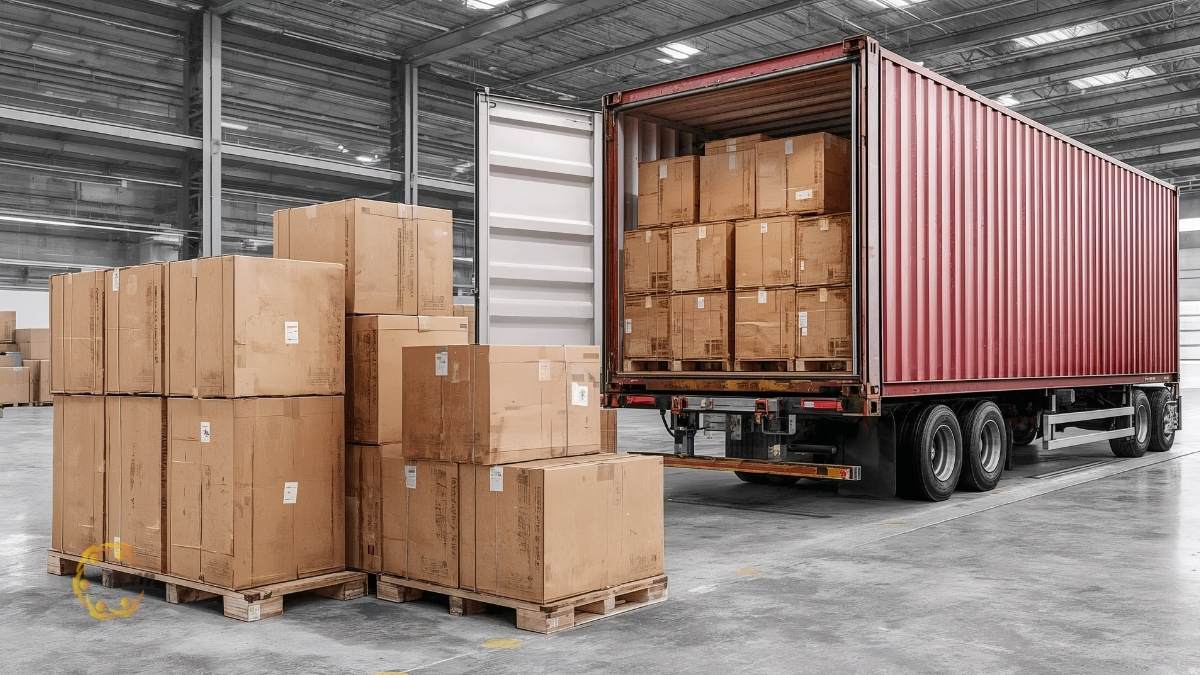
Import and export taxes (tariffs) are understood as taxes levied on goods when those goods are taken out of a country's territory or brought into a country from abroad. In Vietnam, this concept is concretized by two main types: export taxes and import taxes.
Export taxes are taxes levied on goods that the government discourages from exporting in order to protect resources or ensure food security. For example, raw minerals or certain strategic agricultural products are often subject to this tax to prioritize further processing domestically.
Conversely, import tax is a tax levied on goods originating from foreign countries during the importation process into Vietnam. According to the Export Tax Law, Import tax law No. 107/2016/QH13, This is an indirect tax, meaning that the end consumer is the one who actually pays through the market price of the goods.
The purpose of import and export taxes in a market economy.
The application of these taxes is not simply about collecting money for the budget. The purpose of import and export taxes is highly strategic for an economy undergoing rapid transformation like Vietnam.
Firstly, tariffs help protect domestic production by imposing high import taxes on goods that the country already has sufficient supply capacity for. Secondly, they are a tool to control the trade balance and limit import surpluses. Through tariff reductions under FTAs, Vietnam demonstrates its willingness to open its market in exchange for global export opportunities.
Subjects liable to import and export taxes and scope of application
According to Article 2 of the current Law on Export and Import Taxes, the scope of application of this tax is very broad, covering almost all cross-border goods circulation activities:
Goods exported and imported through Vietnam's border crossings are the most common type of goods. This includes all modes of transport, from road and sea to international air.
Next are goods exported from the domestic market to free trade zones (such as export processing zones, bonded warehouses) and vice versa. Finally, there are goods imported and exported on-site, requiring extremely strict tax and customs declaration procedures even though the goods remain within Vietnamese territory.
Cases not subject to import and export taxes

To promote international trade, the law stipulates certain exceptions that are not subject to tax:
- Goods in transit, transshipment, or transshipment through Vietnamese territory will not incur domestic tax obligations. Similarly, humanitarian aid or non-refundable aid goods are also completely exempt to facilitate community support activities.
- Furthermore, the portion of oil and gas used to pay resource tax to the State when exported is also exempt from export tax. This regulation helps avoid double taxation on important national resources during exploitation and business operations.
Who is responsible for paying import and export taxes?
Taxpayers as defined in Article 3 of the 2016 Tax Law include:
- Direct exporters and importers of goods.
- Organizations entrusted with export and import activities are primarily responsible to the customs authorities.
- Passengers entering or leaving the country are carrying goods exceeding the duty-free baggage allowance.
- An authorized customs agent or courier company can submit the documents on your behalf.
Specifically, credit institutions providing guarantees are also responsible for paying taxes if the business violates the deadline. This is a guarantee mechanism of the Import and Export Tax Department to closely manage the risk of tax arrears throughout the system.
Basis and method for calculating import and export taxes as stipulated in regulations.
Understanding how import and export taxes are calculated helps businesses accurately estimate costs and proactively negotiate contracts.
Formula for calculating import and export taxes as a percentage (%):
|
Amount of tax payable = Actual quantity of goods x Unit taxable value x Tax rate |
The taxable value is usually the CIF price (at the port of import) or the FOB price (at the port of export). For the absolute tax method, the formula is:
|
Amount of tax payable = Actual quantity of goods x Absolute tax rate/unit |
The absolute method is often applied to used cars or sensitive items to prevent valuation fraud. Applying the correct formula is the first step in optimizing financial management for SMEs.
What are import tax rates? A detailed classification of tax rates.
Many accountants often wonder what import tax rates are. These are the ratios (1 TP/3T) or absolute amounts used to determine tax liability. Currently, Vietnam applies three main types of tax rates:
Preferential tariff rates apply to goods from WTO member countries (MFN). Special preferential tariff rates are the lowest, applied based on FTA agreements when a valid certificate of origin (C/O) is present. Finally, the normal tariff rate, equal to the preferential rate of 150%, is applied to countries that do not have a trade agreement with Vietnam.
Import tariff schedule and the importance of looking up HS codes.
The import tariff schedule is a systematized list of all goods using HS codes along with their corresponding tax rates. It serves as a "guide" for all customs declaration activities.
Looking up tariff schedules requires businesses to master the six general rules of HS codes. A single digit error in an 8-digit HS code can cause the tariff rate to jump from 0% to 30%. Businesses need to stay updated on the latest tariff reduction schedules from agreements such as RCEP or EVFTA to ensure accuracy.
Time of tax calculation and deadline for payment of import and export taxes.
The tax calculation date is determined as the date of customs declaration registration. Any changes in tax policy or exchange rates after this date will not alter the established tax amount.
Regarding deadlines, businesses must pay taxes before customs clearance, unless there is a bank guarantee (which can be extended for a maximum of 30 days). Late payment will incur a penalty interest of 0.03%/day and will result in the business being classified on a "blacklist" of high-risk businesses, causing difficulties for future import shipments.
Case study on import and export taxes and practical solutions.
Here are some typical case study questions about import and export taxes:
Situation 1: Imported goods intended for export production are destroyed due to fire.
Businesses are exempt from paying taxes if they have a confirmation document from the competent authority and it is accepted by Customs. If they cannot prove an objective reason, the business will still be subject to back taxes and penalties.
Situation 2: Importing machinery and equipment to create fixed assets for an investment incentive project.
In this case, the business is exempt from import tax. However, it is important to note that the list of tax-exempt goods must be registered before importing the first shipment in order to enjoy this benefit.
Comparing common tax calculation methods
In import and export activities, correctly determining the tax calculation method is crucial for businesses to accurately calculate their financial obligations and optimize costs. Currently, there are three common methods: calculating based on a percentage of the goods' value, absolute tax based on quantity, and mixed tax combining both methods. Each method has different characteristics and scope of application, depending on the nature of each type of goods. The table below will help you clearly compare these methods.
| Method | Characteristic | How to calculate import tax | Applicable objects |
| According to the ratio % | Based on the value of the goods | Value x Tax Rate (%) | Most common items |
| Absolute tax | Fixed amount per unit | Quantity x Tax Rate | Used cars, specialized goods |
| Mixed tax | Combine both methods | (Value x %) + (Quantity x Level) | Some items require strict control. |
Expert Opinion: Tax Risk Management from the Perspective of 30 Years of Experience
The most common mistake made by SMEs is complacency in post-customs clearance record keeping. Many business owners think that paying taxes is the end of their obligations. In reality, customs authorities have the right to conduct post-clearance audits for up to five years.
If sufficient documentation proving origin or payment is not maintained, the preferential tax rate 0% may be rejected and collected at the normal tax rate plus penalty interest. Therefore, establish a digital record-keeping process from the outset. All emails exchanged regarding prices and shipping contracts must be preserved as evidence for future tax valuation.
Conclude
Import and export taxes are strategic knowledge for businesses to survive in the era of integration. Understanding how import and export taxes are calculated correctly, mastering the import tax schedule, and staying updated on relevant legal documents will help businesses transform "tax costs" into "cost advantages.".
If your business is struggling with HS code classification or handling complex tax refund applications, let MAN – Master Accountant Network assist you. With 30 years of experience, we are a trusted partner protecting your business's legal reputation through our services: Auditing, Tax accounting, Tax Consulting and In-depth tax settlement.
Service contact information at MAN – Master Accountant Network
- Address: No. 19A, Street 43, Tan Thuan Ward, Ho Chi Minh City
- Mobile/Zalo: 0903 963 163 – 0903 428 622
- Email: man@man.net.vn
Content production by: Mr. Le Hoang Tuyen – Founder & CEO MAN – Master Accountant Network, Vietnamese CPA Auditor with over 30 years of experience in Accounting, Auditing and Financial Consulting.
Quick answers to frequently asked questions about import and export taxes.
You should access the official website of the General Department of Customs or the Ministry of Finance. Avoid using files floating around on the internet from unknown sources.
This could be due to formal errors such as incorrect stamps or signatures, or content errors regarding origin criteria and shipping routes that are not directly related.
You are exempt from tax for the first 2 million VND. The remaining 3 million VND will be subject to import tax and VAT as if it were commercial goods.
Currently, the normal tax deferral regime no longer exists, unless there is a bank guarantee or an extension is granted due to natural disasters or fires.
The tax authority establishes a list of price risks. If the declared price is lower than this level, the local tax office will request the business to provide an explanation based on the authority's guidelines. Where can I find the most accurate import tariff schedule?
Why are goods with a Certificate of Origin Form E still being rejected for preferential tax treatment?
How is import/export tax calculated for a gift worth 5 million VND?
Can businesses defer tax payments?
What is the role of the Import and Export Tax Department in price consultation?