Export taxes currently play a strategic "filter" role in Vietnam's international trade policy, especially as new-generation FTAs enter the phase of extensive implementation. Understanding tax regulations not only helps businesses comply with the law but is also key to optimizing costs and enhancing global competitiveness.
Export taxes are regulated by a strict legal system, from the Tax Law to decrees on preferential tariff schedules. In the context of the strong digital transformation of the Customs sector, misunderstanding the taxable subjects or applying incorrect HS codes can lead to serious financial risks or significant administrative penalties.
Quick information for managers on export taxes
- Export tax isThis is an indirect tax levied on goods permitted to be exported through Vietnamese border checkpoints or from the domestic market into a free trade zone.
- PurposeProtecting natural resources, regulating the domestic supply of raw materials, and generating revenue for the state budget.
- Applicable objectsOrganizations and individuals whose exported goods are subject to tax according to the provisions of the current Export Tariff Schedule.
- Time to pay attentionFrom the business planning stage, cost calculation, and export customs clearance procedures at the Customs agency.
Compilation of the latest legal documents on export taxes
Below is a summary of the most important legal documents that accountants need to be aware of:
| Text type | Number | Summary of content |
| Law | 107/2016/QH13 | Original regulations regarding the subjects and basis for calculating taxes. |
| Decree | Decree No. 134/2016/ND-CP | Detailed guidelines for the implementation of the Law on Import and Export Taxes. |
| Decree | Decree No. 26/2023/ND-CP | The latest preferential export and import tariff schedule. |
| Circular | 38/2015/TT-BTC | Regulations concerning customs procedures and supervision. |
| Circular | 39/2018/TT-BTC | Amend regulations on tax administration and customs procedures. |
Businesses should also pay attention to the Decrees on Special Preferential Tariff Schedules under FTAs such as CPTPP or EVFTA to benefit from the 0% tariff rate for strategic goods.
What is export tax? Definition according to current legal regulations.

To answer the question "What is export tax?", we refer to the Export Tax Law., Import tax law No. 107/2016/QH13 and guiding documents for the period 2026-2027. Export tax is a tax levied on goods in international trade when those goods move out of a country's customs territory.
In Vietnam, the customs territory includes the national border and special areas such as export processing zones and bonded warehouses (free trade zones). Therefore, when domestic businesses sell goods to export processing zones, this activity still gives rise to the obligation to declare export tax if the goods are on the taxable list.
Unlike Value Added Tax (VAT), which typically has a tax rate of 0% to encourage trade, export tax is only applied to certain product groups. These are usually goods that the government needs to restrict exports of to ensure energy security, food security, or sustainable environmental protection.
The role of export taxes in financial management and auditing.

In business management, export taxes are not simply costs but crucial variables in the profit equation. For auditors, reviewing tax obligations helps assess the integrity of financial statements and identify loopholes in internal control processes.
Financially, export taxes directly affect the cost of goods sold and cash flow. Without accurately forecasting the tax rate from the contract signing stage, businesses may face losses when export tax schedules change suddenly due to government policies.
From an auditing perspective, export transactions often carry inherent risks regarding the determination of taxable value. This is especially true for related-party transactions or mineral exports, where tax authorities conduct very thorough post-audits to combat revenue loss and international transfer pricing.
Taxable and exempted export subjects
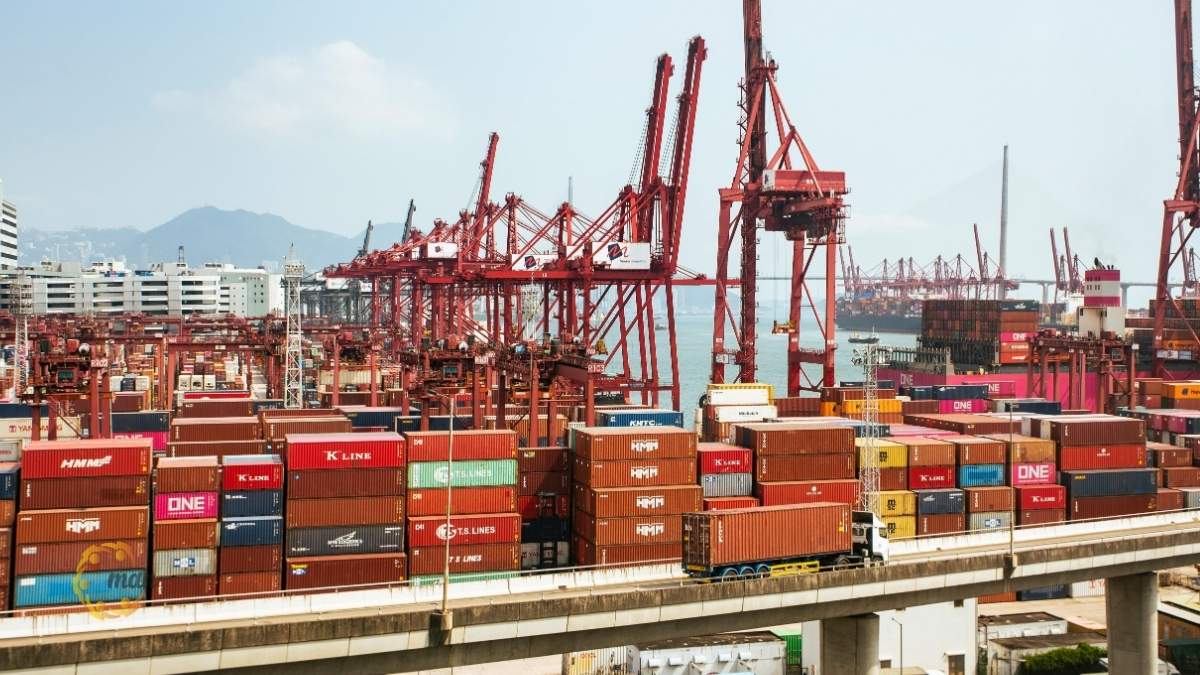
Based on Decree 134/2016/ND-CP, The taxable items include goods exported across the border and goods from the domestic market into the free trade zone. However, most processed industrial goods, manufactured goods, and deeply processed agricultural products currently have a tax rate of 0%.
The main taxed items include: minerals (coal, stone, ore), precious metals, raw timber, and various types of metal scrap. High taxes on these groups are intended to retain raw materials for domestic production and protect the environment.
Conversely, tax exemptions apply to: goods in transit and transshipment; humanitarian aid goods; and goods exported from free trade zones. Additionally, goods temporarily exported and re-imported for trade fairs and exhibitions within a specified period are also eligible for this preferential policy.
Export tariff schedule and how to look up the correct HS code.
The export tariff schedule is a list of product categories along with their corresponding tariff rates, issued by the Government. Currently, this schedule is regularly updated to be consistent with the World Customs Organization (WCO) commodity classification and international commitments.
Looking up the Harmonized System (HS) code is an extremely important but error-prone step. Mistakes in classifying goods can lead to the application of incorrect tax rates, causing significant financial losses or exposing businesses to tax fraud accusations from authorities.
For accurate classification, businesses should refer to the six general rules explaining the classification of goods in Vietnam. For complex goods, businesses should pre-determine the customs code with the General Department of Customs before proceeding with official customs clearance.
How to calculate export tax: Formulas and typical examples
The method for calculating export tax depends on the approach used: percentage-based, absolute tax, or mixed tax. Currently, most goods are calculated using a percentage-based method, based on the taxable value at the port of entry.
Formula for calculating export tax as a percentage
The basic formula for calculating export tax is determined as follows:
|
Export tax payable = Actual quantity exported x Taxable value per unit x Tax rate |
In this context, the taxable value is usually the selling price at the export port (FOB, DAP, etc.) excluding insurance and international transportation costs. This price must conform to the foreign trade contract and related payment documents.
How to calculate export tax for consignment
In the case of exports through intermediaries, the formula for calculating export tax on consignment remains unchanged. However, the responsibility for declaring and paying the tax will be borne by the consignee on behalf of the consignor (the consignor) as stipulated.
The entrusted party must issue a service invoice and hand over the tax payment documents to the entrusting party for expense accounting. The risk often lies in the mismatch between determining the timing of revenue recognition and tax payment, easily leading to tax arrears in the Customs system.
Export customs procedures and steps for customs clearance.
The export customs clearance process has been simplified through the VNACCS/VCIS system. Businesses need to strictly adhere to the procedures to ensure goods are cleared on schedule and avoid unnecessary warehousing costs.
Prepare customs documents.
The basic documentation includes: Customs declaration form, Contract, Invoice, Packing list, and specialized licenses. For some goods, customs authorities may also require a certificate of origin (C/O) or product quality inspection results.
Accurate documentation is a prerequisite for expedited customs clearance. Discrepancies in quantity, weight, or description of goods between documents often result in the declaration being moved to the "Red Channel," causing delays in shipping schedules and unexpected costs.
Detailed steps for export customs clearance
The process includes five core steps:
- Transfer the declaration form.Businesses use electronic declaration software to send data to the Customs system.
- Traffic flowThe system automatically assigns Green, Yellow, or Red lanes based on the risk level.
- Pay taxes: Pay export taxes through the bank's electronic payment system.
- CheckCustoms officers inspect documents or conduct physical inspections of goods at the port.
- Customs clearanceAfter fulfilling all obligations, the declaration form is stamped "Customs Cleared" for loading onto the ship.
Practical Case Study: Addressing HS Code Classification Errors at a Woodworking Company
SituationIn 2025, Company A exported "Laminated wood panels" to Japan. The company independently applied HS code 4421 (other wood products) with a tax rate of 0% to optimize profits without consulting experts.
DetectDuring the post-inspection in 2026, Customs determined that this item falls under HS code 4412 (plywood) due to its technical characteristics. According to the prescribed tariff schedule, HS code 4412 is subject to export tax rate 10%.
ConsequenceThe company was ordered to pay back 5 billion VND in taxes for 50 shipments already exported. In addition, Company A was fined 20% for the unpaid taxes and charged a late payment penalty of 0.03%/day, severely impacting its cash flow.
LessonThis serves as a warning about the lack of expert consultation when determining HS codes. If HS codes had been determined in advance, businesses could have adjusted selling prices to preserve profit margins.
Expert Opinion: Risks and Lessons in Export Tax Management
With over 30 years of experience, I've found that the biggest risk isn't a lack of mathematical knowledge, but rather... “"Subjectivity in compliance"”. Many businesses continue to operate according to old habits, ignoring legal changes.
Common risks
- Declaration errorIncorrect unit of measurement on the tax return leads to an incorrect calculation of the tax payable.
- Customs valueForgetting to add or subtract adjustments according to Circular 39/2015/TT-BTC.
- Tax debt managementInternal systems that are out of sync with Customs lead to unexpected forced halts to shipments.
Experience in optimal handling
- Cross-checkingThe accounting and import/export departments need to periodically reconcile the quantity of goods and taxes paid.
- Customs agentHiring a professional agency helps SMEs reduce risks and stay up-to-date with policies.
- Record keepingKeep documentation for a minimum of 5 years and always have a basis for assessment for sensitive HS codes.
Conclude
Export taxes require meticulous attention to detail and continuous updating from the accounting team. A thorough understanding, from definitions to customs clearance procedures, helps businesses protect their interests and build credibility with regulatory authorities. In the digital economy, tax accuracy is a solid foundation for any international expansion.
At MAN – Master Accountant Network, we provide comprehensive auditing solutions., Tax accounting and Tax Consulting. With a team of experienced professionals, MAN is committed to supporting businesses in tax settlement and tax reporting, helping to optimize finances and minimize legal risks.
Service contact information at MAN – Master Accountant Network
- Address: No. 19A, Street 43, Tan Thuan Ward, Ho Chi Minh City
- Mobile/Zalo: 0903 963 163 – 0903 428 622
- Email: man@man.net.vn
Content production by: Mr. Le Hoang Tuyen – Founder & CEO MAN – Master Accountant Network, Vietnamese CPA Auditor with over 30 years of experience in Accounting, Auditing and Financial Consulting.
Frequently Asked Questions about Export Taxes
Yes. Businesses are eligible for a tax refund if the actual amount exported is less than the amount for which tax was paid. The procedure is carried out at the Customs office where the initial declaration was registered.
Goods temporarily exported and then re-imported for warranty service or trade fairs within a specified period are exempt from tax. Businesses need to closely monitor the deadline to avoid being switched to a tax-paying status.
No. Export tax is a revenue collected on behalf of the State and is not recorded as income. Accountants usually record it as a direct deduction from the selling price or account for it in account 333.
No. Goods exported directly from free trade zones to foreign countries are not subject to Vietnam's export tax under current regulations.
It is necessary to identify the HS code, then consult Appendix I of the Decree on Tariff Schedule. If the HS code has a specific tax rate, then it must be paid; if the rate is 0% or not listed, then no payment is required. If I overpaid export tax, will I get a refund?
Are goods temporarily exported and then re-imported subject to export tax?
Are export taxes included in revenue?
Do businesses in export processing zones pay taxes when selling goods abroad?
How can I know if my product is subject to export tax?